

Dr Quek Swee Chong Consultant Obstetrician, Gynaecologist and Colposcopist MBBS (Dublin), MRCOG (UK), FAMS (Singapore)
Cervical cancer screening is an important part of preventive cervical health care, even when you do not have any symptoms. In Singapore, the screening test and recommended interval depend on factors such as age and individual health history.
If you are attending screening for the first time, you may have questions about what the examination involves, whether it will be uncomfortable and what happens after the sample is collected. Knowing how the appointment typically proceeds and what your results may mean can help you know what to expect.
Cervical cancer screening is used to identify high-risk HPV infection or abnormal cervical cell changes before cervical cancer develops. Depending on age and individual circumstances, screening may involve a Pap test or HPV test.
Human papillomavirus (HPV) is common, and many infections clear without causing long-term problems. However, persistent infection with certain high-risk HPV types can lead to changes in cervical cells over time. Screening can identify high-risk HPV or abnormal cell changes so that appropriate monitoring or further assessment can be arranged when needed.
Although both tests involve collecting a sample from the cervix, they look for different things. A Pap test examines cervical cells for abnormal changes, while an HPV test checks for high-risk HPV types associated with cervical cancer.
Current Singapore guidance recommends a Pap test every three years for women aged 25 to 29 who have ever had sexual activity. From age 30, HPV testing is generally recommended every five years for eligible women. A doctor can advise whether the standard screening schedule applies based on individual circumstances.
Cervical cancer screening involves positioning you for the examination, gently inserting a speculum so the cervix can be seen and collecting a small sample of cervical cells. Knowing what happens at each stage can make the procedure more predictable.
You will usually be asked to undress from the waist down and lie on an examination bed. Your healthcare professional should explain the procedure and help you into the position needed for the examination.
If you are worried about pain, discomfort or a previous difficult examination, mention this before the screening begins. This gives the healthcare professional an opportunity to discuss ways to make the examination more manageable.
A speculum is gently inserted into the vagina so the healthcare professional can see the cervix. You may notice pressure or stretching during this part of the examination, although the sensation varies from person to person. Let the healthcare professional know if you are uncomfortable or need them to pause.
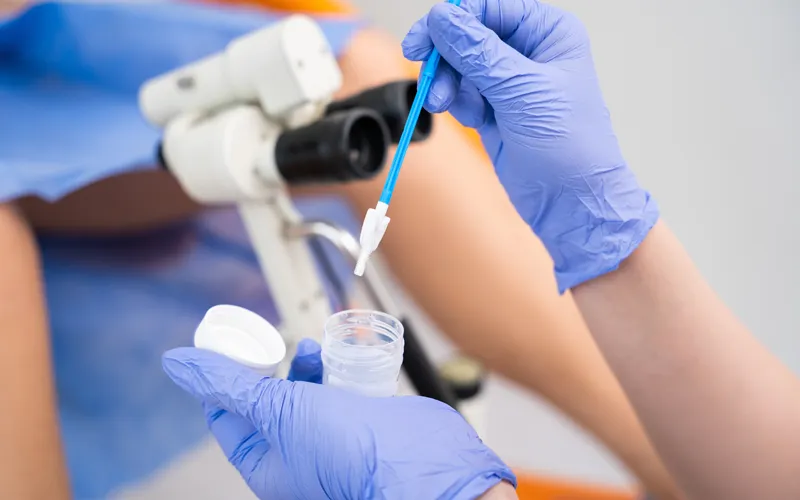
Once the cervix can be seen, a soft brush is used to collect a small sample of cervical cells. The collection itself is brief, and the sample is sent to a laboratory for testing. Depending on the screening test recommended, it will be examined for abnormal cervical cells or high-risk HPV.
After the sample has been collected, the speculum is removed and you can get dressed. Before leaving, ask when your results are expected, how they will be communicated and whether you need to arrange any follow-up.

Most people can return to their usual activities after cervical cancer screening, although mild discomfort or spotting may occur shortly afterwards. Screening results are not usually available immediately because the cervical sample needs to be analysed by a laboratory. Ask when your results are expected and how the clinic will communicate them to you.
You may experience mild discomfort or light spotting after the cervical sample is collected. These effects are generally temporary. If bleeding, pain or other symptoms are persistent or concerning, contact your healthcare provider for advice.
For a Pap test, a normal result means that no abnormal cervical cell changes were identified. For HPV screening, a negative result means that the high-risk HPV types tested for were not detected. Your doctor can advise when your next cervical cancer screening is due based on your age, screening result and individual circumstances.
An abnormal screening result does not automatically mean that you have cervical cancer. A Pap test may identify abnormal cervical cells, while an HPV test may detect a high-risk HPV type that requires further assessment or monitoring.
The next step depends on the specific result. This may involve repeat screening after a recommended interval or further examination of the cervix, such as colposcopy. If an abnormal area is identified, additional testing may be recommended to determine whether treatment is needed.
Regular cervical cancer screening can identify high-risk HPV or abnormal cervical cell changes before they progress further. The appropriate screening test and interval depend on factors such as age, previous screening results and individual medical history, while abnormal findings may require closer follow-up or further assessment.
At SC Quek Gynaecology, cervical cancer screening and follow-up assessment are available for women who are due for routine screening or who have received an abnormal screening result. Dr Quek Swee Chong is a consultant obstetrician, gynaecologist and colposcopist with experience in cervical cancer screening and the assessment of abnormal cervical findings. Where further evaluation is required, he can explain the screening result and whether monitoring, colposcopy or other investigation is appropriate.
If you are due for cervical cancer screening or have been advised to undergo further assessment after an abnormal result, book an appointment with Dr Quek.
It is generally preferable to schedule cervical cancer screening when you are not menstruating, as menstrual blood may affect the cervical sample. If your period begins before your appointment, contact the clinic to check whether you should proceed or reschedule.
You may be advised to avoid vaginal medicines, creams, lubricants and sexual intercourse for a period before cervical screening because they may affect the sample. Follow the instructions provided by your clinic, and let your healthcare professional know if you have used any vaginal products before the appointment.
Yes. HPV vaccination reduces the risk of infection from important HPV types, but it does not protect against every type associated with cervical cancer. Eligible individuals should therefore continue cervical cancer screening according to recommended guidelines.
Menopause itself does not automatically mean that cervical cancer screening is no longer needed. Whether you should continue screening depends on factors such as your age, previous screening history and individual risk factors. Ask your doctor whether you remain eligible for routine screening rather than stopping solely because you have gone through menopause.

Meet Our
Dr Quek Swee Chong
Consultant Obstetrician, Gynaecologist and Colposcopist
MBBS (Dublin), MRCOG (UK), FAMS (Singapore)
With vast expertise in obstetrics and gynaecology, Dr Quek specialises in colposcopy, a critical procedure for the early detection of cervical cancer and its precursors. His experience encompasses diagnosing and treating cervical dysplasia and cancer, utilising advanced techniques to ensure comprehensive patient care. Over the years, he has contributed significantly to the field through clinical practice and patient education, focusing on preventive measures such as HPV vaccination and regular screenings to reduce cervical cancer incidence.